
Buildings Index A | B | C | D | E | F | G | H | I | J | K | L | M | N | O | P | Q | R | S | T | U | V | W | X | Y | Z
The Pumping Station was situated on the site of the Old Mill.
The inlaid stone above the entrance bore the inscription “LULWORTH CASTLE ESTATE WATER WORKS RECONSTRUCTED 1934”.
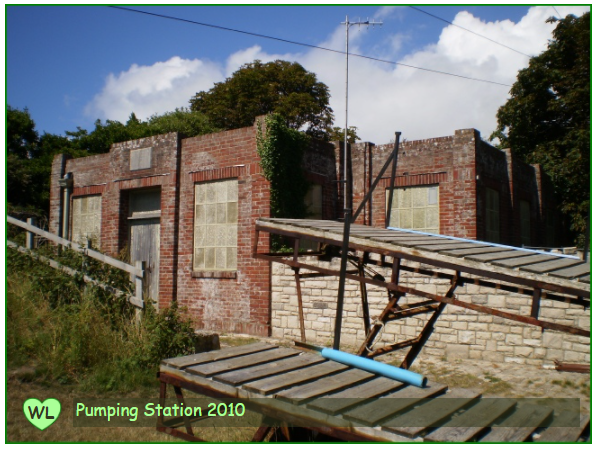
The building was demolished in 2022. The engines were removed but their current whereabouts has not yet been established.
Pumping station remembered 1960
It used to have two tall steel chimney pipes, as tall again as the station. As a kid I lived close by, and got used to the sound of the two pipes making a low pom pom pom noise when the pumping engines were working. The station engineer was called Jack, and early in the morning he let me watch him ignite the diesel engines. He would heat a special steel cylinder with a blow torch until it was red hot, and insert it into each pump engine as part of the start-up process. Once they’d started, I was fascinated by the shiny brass eccentrics and lubrication systems on the engines. They powered two sets of six foot tall vertical pumping pistons, connected by wheels and belts stretching across the engine room. The pistons would hiss and slurp as the spring water was pumped up to the reservoir up past West Lulworth village.
In a side room there was an electric pump, which was used at weekends when Jack wasn’t there to operate the diesels. It was so small and quiet that it seemed a real anti-climax after the drama and smell of the main pumping room!
Jack and the lady who managed the Ladies loo were very kindly people. He would allow me to help him with some of his chores e.g. counting and bagging the big copper pennies from the Gents. Another job was tearing newspaper into squares for the Gents!
Simon Hoyle, 2020
My Grandad, Jack Bonham, looked after these gas oil engines and water pumps from 1950, until his retirement in 1975. The Pump House was owned by the Weld Estate, so it came with a free house, Number 2 East Lulworth, as well as a Weld Estate vehicle to travel around with.
The engines and pumps had to run every day, to keep the level up in the two reservoirs. Grandad would work 51 weeks a year, 6 days a week servicing, starting and stopping the two gas oil engines using compressed air. Starting most mornings at 6am, to ensure the taps on the estate didn’t go dry. Then turning the engines off towards the end of the day, when the reservoirs were full. Water on Sundays and overnight being topped up by a small electric pump.
Pete Keay, 2024
Page last updated: 5 April 2024