
Members of the Spavins Family first lived in West Lulworth c. 1932
Albert Edward Spavins (1928-2017)

Albert was born on 10 August 1928, in Eversholt, Bedfordshire to Albert Edward Spavins (1904-1961) and Vera Kathleen Mary Agnes Spavins nee Nightingale (1910-1943). His sister Mary was born the following year.
In 1932 the family of four moved to West Lulworth and lived at No. 19 opposite the War Memorial. The family grew to seven with the arrival of Erica in 1933, Michael in 1936 and Christine in 1941.
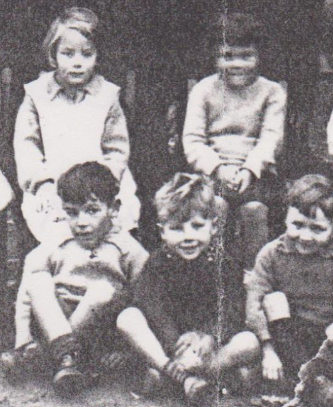
Albert bottom left and Mary top right
During the war the family were living at 4 Sunnyside Terrace. Sadly Albert’s mother Vera died in 1943 aged 33. Albert was then 15. The family later moved to Lulcote.
In 1955 Albert married Joan Grace Holliwell (1929-2008). The following year they were living at 47 Queen’s Drive, Finsbury Park, a ten-minute walk from Highbury Stadium – Albert remained an Arsenal fan throughout his life.
By 1956 they had emigrated to Canada and were living at 24 Foxley Street, Trinity, Toronto. Albert was an assembler. Albert and Joan had four children – Bruce, Erica, Teresa and Christopher.
In 1963 the family were living at 58 Sparrow Avenue, York, Ontario. Albert was then a planner & Joan a medical technician. By 1965 they had moved to 1805 Barsuda Drive, Mississauga, Ontario.
In 1972 Albert was then unemployed. Two years later he was employed as a teacher.
Joan, who was also an accomplished artist, died at their home in Mississauga on 20 June 2008 aged 79.
Joan’s art was described as ‘spontaneous and intuitive, showing her love of life and affinity for vibrant colour’. She studied at the University of London, the Institudo San Miguel D’Allende in Mexico and Sheridan College locally. Her work has been shown internationally and is also in a permanent collection by the Art Gallery of Mississauga.
Albert was also very artistic and in 2013 at the age of 84, he held his first public exhibition. I decided I would do something quite different. I’ve picked up thousands of shells over the many years I’ve been going to Sanibel Island so I decided I would use them.”
Albert died on 9 July 2017 at Lancaster, California aged 88. Albert was survived by his four children and his youngest sister Chris who lives in Yeovil. Albert’s older sister Mary died in 2009, his younger brother Michael in 2015 and his younger sister Erica in 2016.
Some of Albert’s memories of his time in West Lulworth
Church & Choir
I was a member of the choir. In the 1930’s and throughout the war years the church would be packed for the morning service every Sunday. As a child I used to look forward to the Magic Lantern shows put on by the vicar Mr Sharpe. These occurred after Evensong. The Catholics of the village came in after the service and were welcome to see the presentation. Mr Sharpe had been a missionary at some time in his life and must have been a keen photographer. Everyone must have enjoyed his presentations as there was always a good crowd in attendance.
Mrs Ironmonger played the organ and we choir boys took turns pumping the organ.
Some years ago when visiting from Canada I noticed that the vestry had been vandalised and that the beautiful window over the alter had been smashed. I believe that it has been repaired.
During the war years the army attended Sunday morning services and the military band played during the singing of the hymns. The great thing about being in the choir was the fact that we were paid every quarter. As I remember it was 3 shillings and sixpence.
On Remembrance Day the service was conducted at the War Memorial. Most of the villagers attended and the Catholic Priest was there with the Vicar. Something happened with the small steeple. It was never replaced. My father’s sister Dorothy Whitlock with her husband Charles are also buried in the churchyard. Many of the notable people of my youth are also buried there but I noticed that their graves were somewhat neglected. I am reminded of the poem ” And Kings and Queens must tumble down and in the dust be equal made, with the poor crooked scythe and spade.”
Collecting Soft Fruit in the Retreat House Garden
As a child I remember collecting loganberries, raspberries, strawberries and gooseberries in the garden at the back of the house. My mother used to make them into jam which would last throughout the winter months. We had 5 children’s ration books and one adult so my mother had plenty of sugar to make the jam. During the evacuation of the army from Dunkirk my mother would make cakes and jam tarts for the men who for some reason found themselves at Lulworth. Ironically, my father was a survivor of the troopship Lancastria which was the greatest loss of life ever suffered by the British Army.
New Years Day
I remember one New Year’s Day just before the war. There was an annual football match between the Lobsters and the Shrimps. The Lobsters were the older fishermen and the Shrimps their sons and their friends. My father was the manager of the N.A.A.F.I at Lulworth Camp and had to do some work early in the morning. On the way home he happened to come to watch the football match. As soon as some of the older fishermen saw him they pressed him to play. Well, play he did. It was a very muddy pitch and I well remember how upset my mother was when she saw him when we returned home. The games were always played in a field at the bottom of Sunnyside, owned at the time by the Yates family.
Silver Jubilee Parade 1935
I remember well the parade through the village on the occasion of the Silver Jubilee. My mother and several other mothers dressed six of us young boys as toy soldiers and we had to march in the parade. However, the best thing in the parade that I can remember was a model of the Queen Mary. It was loaded over a car. You could not see the car, only the majestic liner floating through the village. It was a wonderful occasion for the children of the village for we had a party that evening in the Parish Hall and everyone was presented with a mug to commemorate the occasion.
School
We were Church of England but my mother insisted on sending us to the Roman Catholic School in East Lulworth. She had heard the Miss Yarnitsky was the best teacher in Dorset and that was enough for her. On days that my sister and I missed the bus we had to walk to school.
Eventually, we moved to 4 Sunnyside Terrace, and finally to Lulcote. My mother died in 1943 and together with my father is buried in the churchyard overlooking the village. As I understand it, there are still some relatives of mine living in the village. I hope that they will enjoy their life there as my family and I did. I have some photos taken in the 30s which I will send by snail mail.
Coal Shortage
During the war we lived at 4 Sunnyside Terrace. At one point during 1942 Mr Chaffey, the coalman, could not deliver coal because his horse and cart could not get up the hill because of ice and snow. We were rapidly running out of coal. I suggested to my mother that I go up the hill in the middle of the night and cut one of the trees down that were growing in the copse. I did this and sawed the tree in sections and cut them into logs throughout the night. Within a few nights most of the trees had been cut down by other resourceful people.
Another memory of Lulworth was playing in the 1914/18 tanks on the ranges. I was somewhat surprised to find that one man’s job was to change the gears.
Christmas
Christmas Eve was a magical time at Lulworth. As a member of the choir I remember how we went around the village singing carols. There was no electricity in most of the village at the time and most cottages used lamps and candles. The church was lit by candles and was a lovely sight in the evenings.
One of the most wonderful times of the year in Lulworth was Christmas. The choir would go around the village and sing carols. The church was lit by candles as we had no electricity in those days. On Christmas Day itself the church would be packed and with the army band playing everyone sang the carols with great enthusiasm.
On Boxing Day came the annual football match. The Lobsters vs the Shrimps. The Lobsters being the older fishermen and other adults and the Shrimps being the sons and other youngsters of the village.
I well remember my father, who at the time was the NAAFI manager at the camp coming by to watch the game. He was dressed in a suit and tie. Someone on the Lobster side who was tiring persuaded my father to take his place. It was a muddy pitch and when Dad got home he was covered in mud. My mother was so upset that it took him some time to calm her down. I have often wondered whether or not they still play the game on Boxing Day. Lulworth had a football team in the 1930s called The Foresters. We played in the field just below the cemetery.
Tide
The first unusual event that I remember was when the tide went out so far that it was possible to walk all the way across the cove; it was also possible to walk out to the two points of the cove.
Castle Inn
My aunt Dorothy Whitlock was a collector of seashells and black sand. When you enter the Castle Inn you may notice on your left hand side the mural created by her of shells and black sand. I myself now collect shells mainly from Sanibel Island in Florida and use them with a combination of calligraphy to create pictures.
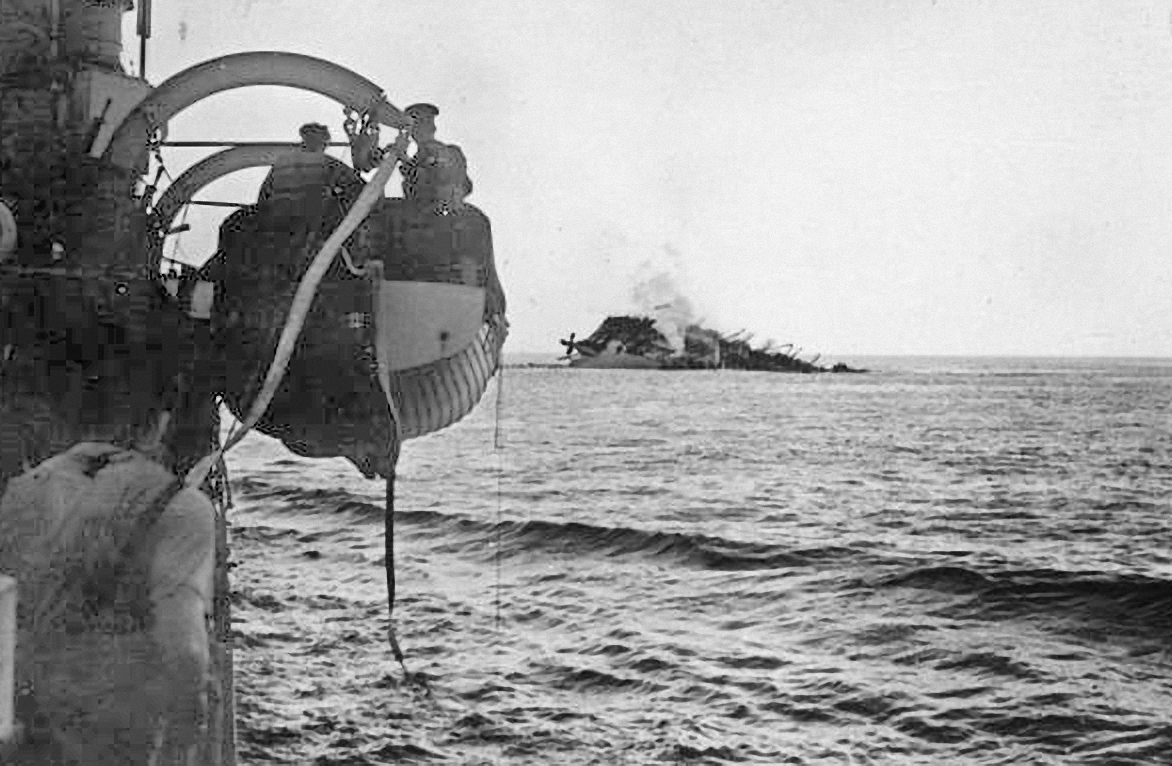
HMT Lancastria – sunk on 17 June 1940 with the loss of as many as 6,000 lives
My father, SQMS Albert Edward ‘Spav’ Spavins was a Lancastria survivor. He told me that as one of the last people aboard ship he had to go to the boat deck because there was no room below. As the ship began to sink he tried to persuade one of his friends to jump with him. However, his friend could not swim. Dad jumped and as he looked up his friend lit a cigarette and waved him goodbye. Dad did not remember how long he spent in the water but eventually a mine sweeper, very overloaded, passed by and someone threw him a lifebelt and along with many others was towed home to England. He was wearing only a shirt when he got home. When he finally got a new uniform and equipment he came home on leave. He was in a bad way and told me that the Stuka dive bombers had somewhat un-nerved him. Dad recovered.
Some years later Dad volunteered once again with the Royal Army Service Corps/EFI to go to Korea. It so happened that I was with The Somaliland Scouts at the time and when Dad returned from Korea I flew over to Aden and met the ship where I met my father and some of his friends.
I was in Lulworth last year (2009) and noticed that Lulcote still retains its name. I was four years old when we first arrived in Lulworth and my sister Mary was 3. My brother Michael and my sisters Erica and Christine were both born in the village and so were considered to be ‘villagers’.
Lulworth must be the most wondrous place in all the world for a young child with imagination and also blessed with good health.
My boyhood friends were John and Gerald Hawkins, Brian O’Hare and Donald O’Hare among many others.
I remember that the Meaden family who lived on the road to the village school had a marvellous fig tree and anyone was welcome to pick some.
The village baker would deliver the hot bread to your front door. On Good Friday the buns would be hot. I have never in all of my years ever seen or tasted the cottage loaves made in the bakery at Lulworth.
At Sunnyside we lived next door to the Miller family who were all fishermen. Occasionally Mr Miller would drop off a lobster or large crab for the family. David and Jim were her sons and Jessie her daughter. All lovely people. Whenever, I visited from Canada I would drop in at the coast guard cottages to see Jim. He was always very welcoming. Dulcie Miller and her brother lived at Rose Cottage or near it.
Once 3 steamers came into the cove on the same day. I do not believe that it had ever happened before or since. One was the Empress from Weymouth and the Victoria from Bournemouth. I do not remember the name of the other one.
On Guy Fawkes night there was always a huge fire on Hambury and people spent weeks preparing it.
I hope that all of the people privileged to live in the village and the remainder of my relatives enjoy their lives as much as I did.
Albert Spavins, 7 March 2010
Page last updated: 8 February 2025